In the dynamic world of digital marketing, reaching your target audience effectively is paramount. For businesses worldwide, Google Ads has long been the go-to platform, evolving significantly from its origins as AdWords. This comprehensive guide will demystify Google Ads, providing small to medium business owners, marketing managers, and entrepreneurs with the knowledge to set up, optimize, and scale campaigns for maximum return on investment (ROI). We’ll explore everything from foundational concepts to advanced strategies, including how to leverage tools like the Google Ads Keyword Planner, understand the difference between Google Ads vs. Google AdSense, and critically, how to protect your valuable ad spend from the pervasive threat of invalid clicks and ad fraud. By the end of this guide, you’ll be empowered to drive higher ROI and ensure your advertising budget truly works for your business.
Understanding Google Ads: From AdWords to Today's Powerhouse
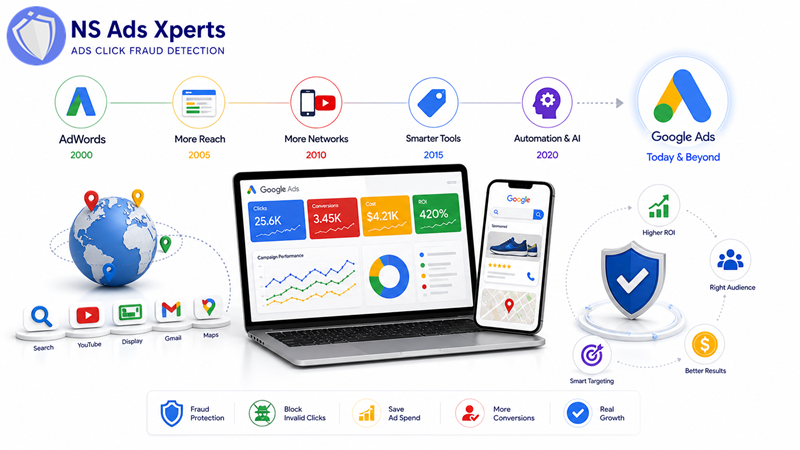
For many years, the world of online advertising knew Google's primary platform as Google AdWords. Launched in 2000, AdWords revolutionized how businesses could reach customers, allowing them to bid on keywords to display text ads in search results. This platform quickly became indispensable for anyone looking to drive targeted traffic to their websites.
In 2018, Google made a significant strategic move, rebranding AdWords to Google Ads. This change reflected a broader scope of advertising possibilities beyond just text-based search ads. Today, Google Ads encompasses a much wider array of campaign types, including display ads across millions of websites, video ads on YouTube, shopping ads for e-commerce, and app campaigns, making it a truly powerful, unified platform for businesses of all sizes to advertise online. The main difference between Google AdWords and Google Ads is essentially the name and the expanded capabilities that came with the rebranding, offering advertisers more versatile tools to connect with their audience.
Why Google Ads Matters for Your Business Growth
- Precision Targeting: Google Ads allows businesses to reach potential customers at the precise moment they are searching for their products or services, demonstrating high intent.
- Advanced Segmentation: With sophisticated targeting capabilities, you can define your audience based on demographics, interests, location, device usage, and even past interactions with your business.
- Measurable Results: Every click, impression, and conversion can be tracked, providing invaluable data for continuous optimization and flexible budgeting. This transparency allows you to see exactly where your money is going and what kind of return you're getting.
Getting Started with Google Ads: A Step-by-Step Business Guide
Setting up your first Google Ads campaign might seem daunting, but with a structured approach, it becomes a straightforward process. This section will guide you through the foundational steps to launch your advertising efforts and start driving traffic to your Google Ads website.
To begin, you'll need a Google account to create your Google Ads for business account. Once registered, Google will guide you through setting up your first campaign. The platform offers various campaign types, each designed for different business goals:
- Search Campaigns: Text ads appearing on Google search results pages, ideal for capturing demand.
- Display Campaigns: Visual ads shown across millions of websites and apps, great for brand awareness and remarketing.
- Video Campaigns: Ads displayed on YouTube and other video partner sites, perfect for engaging storytelling.
- Shopping Campaigns: Product-focused ads with images, prices, and store names, essential for e-commerce businesses.
- App Campaigns: Promote your mobile app across Google's properties.
- Performance Max: An automated campaign type designed to find converting customers across all Google Ads channels.
Choosing the right campaign type depends entirely on your specific business goals. For instance, if you're an e-commerce business, Shopping campaigns are crucial, while a service-based business might prioritize Search campaigns for lead generation. Key components of any campaign include carefully selected Keywords, organized into logical Ad Groups, compelling Ad Copy, high-quality Landing Pages, and effective Bidding Strategies. Many businesses ask, "Can I use Google Ads to drive traffic directly to my website?" The answer is a resounding yes; that's its primary function!
Crafting Effective Keywords and Ad Copy
The success of your Google Ads campaign hinges on thorough keyword research. This process helps you target the right audience actively searching for your products or services. For this, the Google Ads Keyword Planner is an indispensable tool.
Once you have your keywords, writing compelling ad copy is crucial. Your headlines and descriptions must be attractive, convey value, and motivate users to click. Leverage ad extensions like sitelinks, callouts, and structured snippets to provide more information and increase your ad's visibility. Remember, the quality of your landing page is just as important as your ad; it should be relevant, fast-loading, and user-friendly to ensure a smooth user experience after clicking your ad.
Understanding and Utilizing Google Ads Keyword Planner
The Google Ads Keyword Planner is a free tool within your Google Ads account designed to help you discover new keyword ideas and analyze their potential performance. Many users ask, "What is Google Ads Keyword Planner and how do I use it effectively?"
This powerful tool allows you to:
- Discover New Keywords: Enter words, phrases, or a URL related to your business, and the Keyword Planner will generate a list of relevant keyword ideas.
- Analyze Search Volume: See how often certain keywords are searched and how that volume changes over time.
- Forecast Performance: Get estimates on bids, clicks, and costs for your chosen keywords based on your budget.
- Organize Keywords: Group related keywords into ad groups, which helps in creating more targeted and effective campaigns.
By effectively using the Google Ads Keyword Planner, you can build a robust keyword strategy that ensures your ads are shown to the most relevant audience, maximizing your chances for conversions.
Optimizing Your Google Ads for Maximum ROI & Preventing Ad Waste
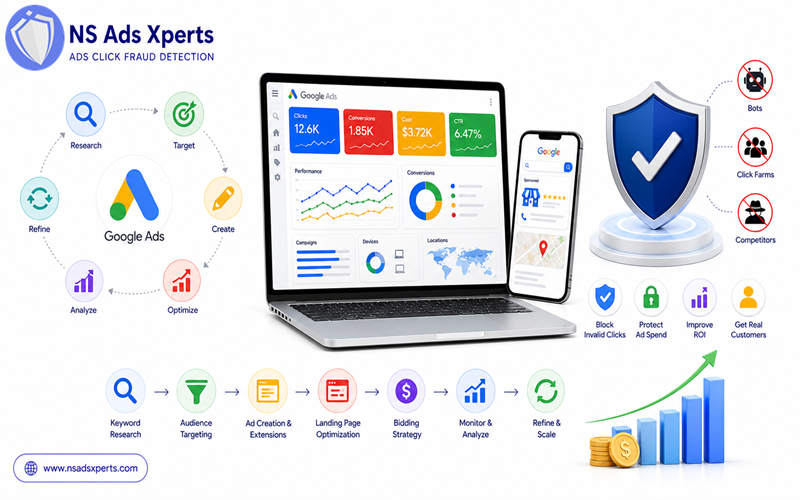
Running a Google Ads campaign is not a "set it and forget it" endeavor. Ongoing optimization is crucial for achieving better results and maximizing your ROI. Techniques such as A/B testing ad creative and landing pages, refining keyword lists (especially by adding negative keywords to filter irrelevant searches), adjusting bid strategies, and segmenting audiences are vital. However, many businesses face critical pain points: high Cost Per Click (CPC) and a low Conversion Rate. Often, these issues stem from a hidden threat: ad fraud.
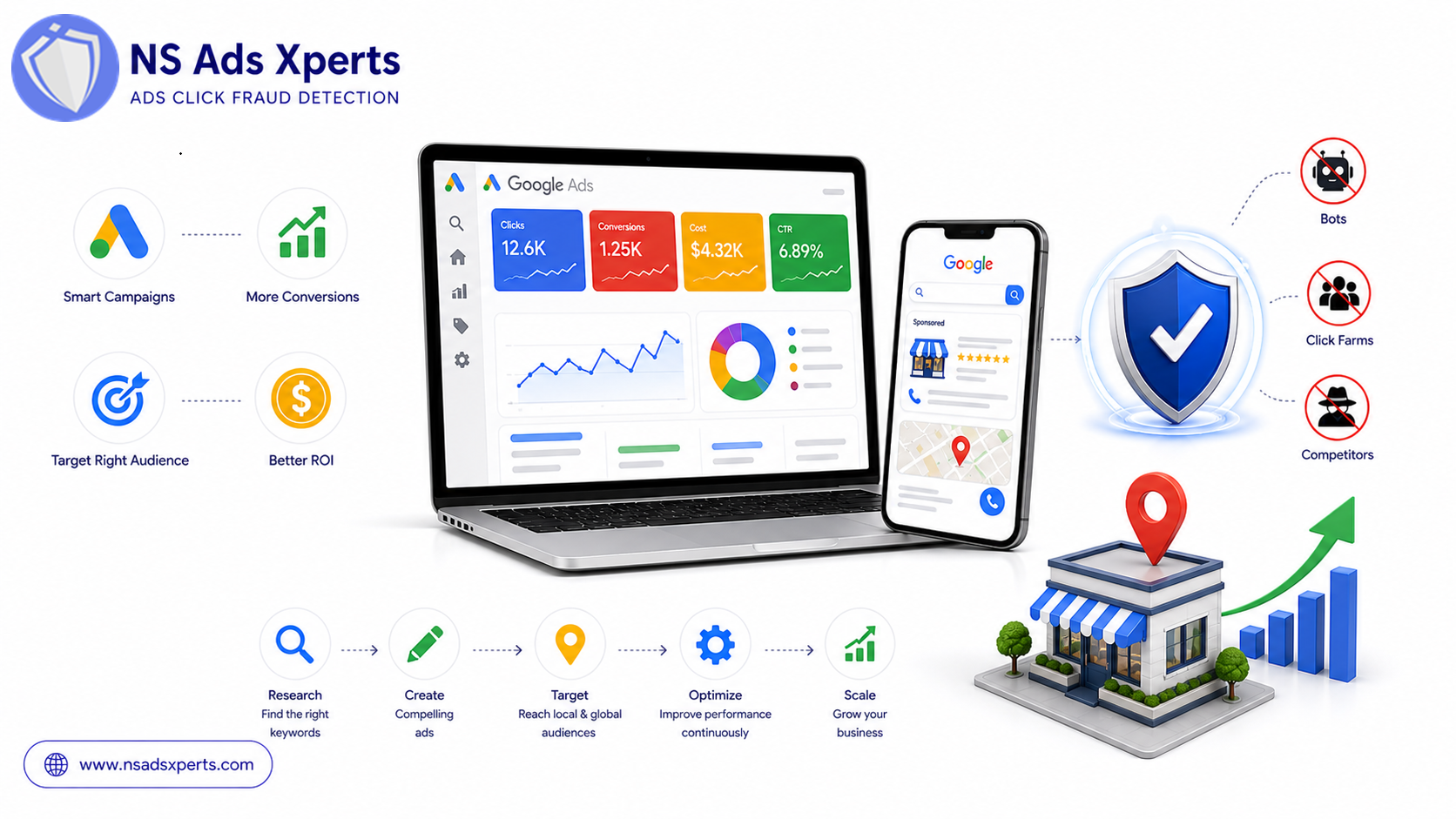
Ad fraud, including click fraud and invalid clicks, is a major cause of wasted ad budget and inaccurate data. It occurs when malicious clicks come from bots, click farms, or even competitors aiming to deplete your budget without any genuine interest in your offerings. This phenomenon directly impacts your ROI, making it difficult to scale profitably. Businesses often lament, "Bị đối thủ cạnh tranh click phá hoại quảng cáo" (being sabotaged by competitor clicks) and find it "Khó khăn trong việc mở rộng quy mô quảng cáo nhưng không đạt được lợi nhuận" (difficult to scale advertising profitably) due to this insidious problem.
This is where NS Ads Xperts™ comes in as your global solution. NS Ads Xperts™ directly addresses these pain points by effectively preventing all types of invalid clicks from bots, click farms, and competitors. Our SaaS solution is a leading click fraud detection and ads fraud protection tool, designed to be an ultimate ad budget waste solution. It specifically targets bot traffic detection and invalid traffic Google Ads, ensuring your campaigns are protected against competitor click fraud.
By deploying NS Ads Xperts™, businesses can achieve significant benefits: optimizing advertising costs, improving ROI and the accuracy of advertising data, and safeguarding campaigns against malicious clicks. Our proprietary software, NS Ads Xperts™, includes advanced features like Behavior tracking and robust IP block capabilities. For instance, our Starter plan offers 500 IP blocks/month, the popular Business plan provides 1,500 IP blocks/month, and the Agency plan scales up to 10,000 IP blocks/month, all supported by Advanced analytics. This ensures your budget is spent on genuine prospects, leading to better results. Many ask, "How much budget do I need for Google Ads to see a return on investment?" By preventing ad waste, NS Ads Xperts™ ensures that whatever budget you allocate, it is used effectively, maximizing your actual ROI.
The Hidden Threat: Understanding Click Fraud and Invalid Clicks
Click fraud refers to fraudulent clicks on pay-per-click (PPC) ads that are not made by legitimate potential customers. These malicious clicks can originate from automated bots, organized click farms, or even direct competitors aiming to exhaust your ad budget prematurely. The severe impact of click fraud extends beyond just wasted ad spend; it inflates your CPC, skews your campaign performance metrics, and compromises the accuracy of your conversion data.
For businesses, this means less budget available for genuine clicks, leading to a lower conversion rate and ultimately, reduced profitability. It directly feeds into the pain points of "Bị đối thủ cạnh tranh click phá hoại quảng cáo" and "Khó khăn trong việc mở rộng quy mô quảng cáo nhưng không đạt được lợi nhuận," as your ad spend is siphoned away by non-converting, malicious activity.
NS Ads Xperts™: Your Global Solution for Ad Fraud Protection
At NS Ads Xpert Global, we understand the critical need to secure your advertising investments. That’s why we developed NS Ads Xperts™ (https://www.nsadsxperts.com/), the essential SaaS tool for advertisers globally. Our solution caters to a diverse range of clients, including businesses running Google Ads, marketing agencies, affiliate marketers, e-commerce businesses, and other SaaS companies, all looking to safeguard their ad spend.
NS Ads Xperts™ offers flexible pricing tiers to suit various business needs:
- Starter – $39/month: Ideal for individuals or small businesses, includes 1 domain, 500 IP blocks/month, unlimited clicks, behavior tracking, and email support.
- Business (Most Popular) – $69/month: Perfect for growing businesses, features 3 domains, 1,500 IP blocks/month, CSV export, detailed analytics, and priority support.
- Agency – $159/month: Designed for marketing agencies, offering 20 domains, 10,000 IP blocks/month, advanced analytics, and dedicated support.
All plans come with a 7-day free trial, including full feature access during the trial period, and importantly, no credit card required to sign up. This allows you to experience the full power of NS Ads Xperts™ risk-free.
Protect your Google Ads campaigns from wasted spend and boost your ROI today! Try NS Ads Xperts™ Free for 7 Days – No Credit Card Required! Visit https://www.nsadsxperts.com/ to start your free trial.
Measuring Success and Advanced Strategies in Google Ads
To truly understand the effectiveness of your Google Ads ROI, accurate conversion tracking is non-negotiable. Setting up conversion tracking allows you to measure specific actions users take on your website after clicking your ad, such as purchases, lead form submissions, or phone calls. This data is critical for understanding which campaigns and keywords are driving valuable outcomes.
Key performance metrics to monitor include: Impressions (how often your ad is shown), Clicks (how many times your ad is clicked), Click-Through Rate (CTR) (the percentage of impressions that result in a click), Conversions (desired actions taken), Cost Per Acquisition (CPA) (the cost of acquiring a single conversion), and Return on Ad Spend (ROAS) (the revenue generated for every dollar spent on ads). Many ask, "Is Google Ads still effective for generating leads and sales in [current year]?" Absolutely, when managed strategically and protected from fraud, Google Ads remains one of the most powerful platforms for driving business growth.
For scaling and maximizing performance, consider advanced strategies such as: Remarketing (targeting users who have previously interacted with your business), Audience Segmentation (creating highly specific audience lists), Automated Rules (setting up rules to adjust bids or pause ads based on performance), and leveraging Google's AI-powered optimization features, which can often find efficiencies human analysis might miss. Regular review of your my Google Ads account is essential for continuous improvement.
Leveraging Google Analytics for Deeper Campaign Insights
While Google Ads provides robust reporting, linking it with Google Analytics offers a holistic view of user behavior after they click your ads. This integration allows you to:
- Track User Journeys: Understand how users navigate your site, which pages they visit, and how long they stay.
- Identify Bounce Rates: Pinpoint ad groups or landing pages that lead to high bounce rates, indicating a mismatch between ad and content.
- Analyze Conversion Paths: See the full sequence of interactions that lead to a conversion, providing insights for further optimization.
By combining data from both platforms, you gain deeper insights into user engagement and can make more informed decisions to refine your Google Ads campaigns.
Google Ads vs. Google AdSense: Clarifying the Confusion
It's common for newcomers to digital advertising to confuse Google Ads with Google AdSense. While both are part of Google's advertising ecosystem, they serve fundamentally different purposes and cater to different users. Many ask, "How does Google AdSense compare to Google Ads, and which one should I use?"
- Google Ads: This platform is for advertisers. If you are a business owner, marketing manager, or entrepreneur who wants to display ads and drive traffic to your website, generate leads, or make sales, then Google Ads is the platform for you. You use Google Ads to spend money to advertise your products or services.
- Google AdSense: This platform is for publishers (website owners or content creators). If you have a website or blog with valuable content and want to earn revenue by displaying Google Ads on your site, then Google AdSense is what you need. You use Google AdSense to make money by hosting ads from Google Ads advertisers.
In essence, Google Ads is where businesses pay to get their ads shown, and Google AdSense is where website owners get paid to show those ads. They are two sides of the same coin, facilitating the broader Google advertising ecosystem. You'll find information about the publisher side often on google adsense com.
When to Partner with a Google Ads Expert or Agency
While this guide provides a strong foundation, managing Google Ads campaigns can become complex, especially for businesses with significant budgets or highly competitive industries. This leads many to wonder, "When should I consider hiring a Google Ads agency or an expert?"
Consider partnering with a Google Ads expert or agency if:
- Your campaign structures are intricate, requiring specialized knowledge.
- You have a substantial budget allocated to advertising and need to ensure optimal spend.
- You lack the in-house time, expertise, or resources to manage campaigns effectively.
- Your current campaigns are underperforming, and you need professional intervention to turn them around.
The advantages of professional management include strategic insights, significant time savings, access to advanced tools and methodologies, and potentially better overall campaign performance due to their experience and focus. However, it's crucial to remember that even with professional management, tools like NS Ads Xperts™ are indispensable for safeguarding ad spend against fraud. An agency's efforts can only yield maximum ROI if the budget is protected from invalid clicks. NS Ads Xperts™ ensures that every dollar an agency optimizes is spent on genuine prospects, amplifying their effectiveness.
Whether you manage your Google Ads yourself or work with an agency, protecting your ad spend is paramount. Ensure your campaigns are secure and efficient with NS Ads Xperts™. Learn more at https://www.nsadsxperts.com/ or contact NS Ads Xpert Global for expert advice on ad fraud prevention.
Frequently Asked Questions (FAQs) about Google Ads
Q: What is the main difference between Google AdWords and Google Ads?
A: Google Ads is the current name for Google AdWords. The rebranding in 2018 reflected Google's expanded advertising offerings beyond just text ads, to include display, video, and app ads, making it a more comprehensive platform.
Q: How do I start a Google Ads campaign for my small business?
A: Start by creating a Google Ads account, defining your business goals, choosing a campaign type (e.g., Search), conducting keyword research (using Google Ads Keyword Planner), writing compelling ad copy, setting your budget, and creating relevant landing pages. Remember to track conversions from the start.
Q: Is Google Ads still effective for generating leads and sales in the current year?
A: Yes, Google Ads remains highly effective. With over 3.5 billion searches daily, it allows businesses to reach customers actively searching for products or services. Its effectiveness is maximized through continuous optimization, smart bidding, and crucially, protecting your budget from click fraud with tools like NS Ads Xperts™.
Q: What are the essential steps to optimize a Google Ads campaign for better results?
A: Key optimization steps include continuous keyword refinement (adding negative keywords), A/B testing ad copy and landing pages, adjusting bids based on performance, improving Quality Score, expanding audience targeting, and actively monitoring for and preventing invalid clicks and ad fraud to ensure your budget is spent efficiently.
Q: How much budget do I need for Google Ads to see a return on investment?
A: There's no fixed budget; it depends on your industry, competition, and goals. Start with a manageable budget, focus on high-intent keywords, and meticulously track ROI. Preventing ad fraud with solutions like NS Ads Xperts™ is vital for ensuring your budget is not wasted on invalid clicks, thereby improving your actual ROI regardless of the starting amount.
Q: When should I consider hiring a Google Ads agency or an expert?
A: Consider hiring an agency or expert if your campaigns are complex, you lack the time or in-house expertise, your current results are unsatisfactory, or you need to scale significantly. Professionals bring strategic insights and advanced tools, helping you achieve better results while you focus on your core business. Even with an agency, consider using ad fraud protection tools for optimal budget use.
Q: Can I use Google Ads to drive traffic directly to my website?
A: Absolutely. Google Ads is primarily designed to drive targeted traffic to your website, specific landing pages, or app. Through various campaign types like Search, Display, and Video, you can direct users to any URL you specify, aiming for conversions, leads, or brand awareness.
Q: What is Google Ads Keyword Planner and how do I use it effectively?
A: Google Ads Keyword Planner is a free tool within Google Ads that helps you research keywords for your search campaigns. You can use it to discover new keyword ideas, analyze their search volume, forecast potential performance, and organize them into ad groups, guiding your targeting strategy.
Q: How does Google AdSense compare to Google Ads, and which one should I use?
A: Google Ads is for advertisers who want to display ads and drive traffic to their own sites. Google AdSense is for website publishers who want to earn money by displaying Google Ads on their websites. You use Google Ads if you want to advertise; you use Google AdSense if you want to monetize your website by hosting ads.
Conclusion
Mastering Google Ads is a journey that can significantly transform your business's online presence and revenue. From understanding its evolution from AdWords to leveraging tools like the Google Ads Keyword Planner, effective campaign management demands continuous learning and optimization. However, the true potential of your campaigns can only be realized when your ad spend is protected from the silent threat of ad fraud and invalid clicks. High CPCs and low conversion rates often signal that a portion of your budget is being siphoned away by malicious activity, hindering your ability to achieve a positive ROI and scale profitably.
By implementing a robust click fraud detection solution, such as NS Ads Xperts™, you empower your business to safeguard its investments, ensure data accuracy, and maximize the effectiveness of every advertising dollar. Don't let bot traffic and competitor click fraud dictate your campaign performance. Take control of your ad spend and unlock the true power of Google Ads. Start your 7-day free trial of NS Ads Xperts™ today – no credit card required – and experience the peace of mind that comes with superior ad fraud protection. Visit https://www.nsadsxperts.com/ to begin.