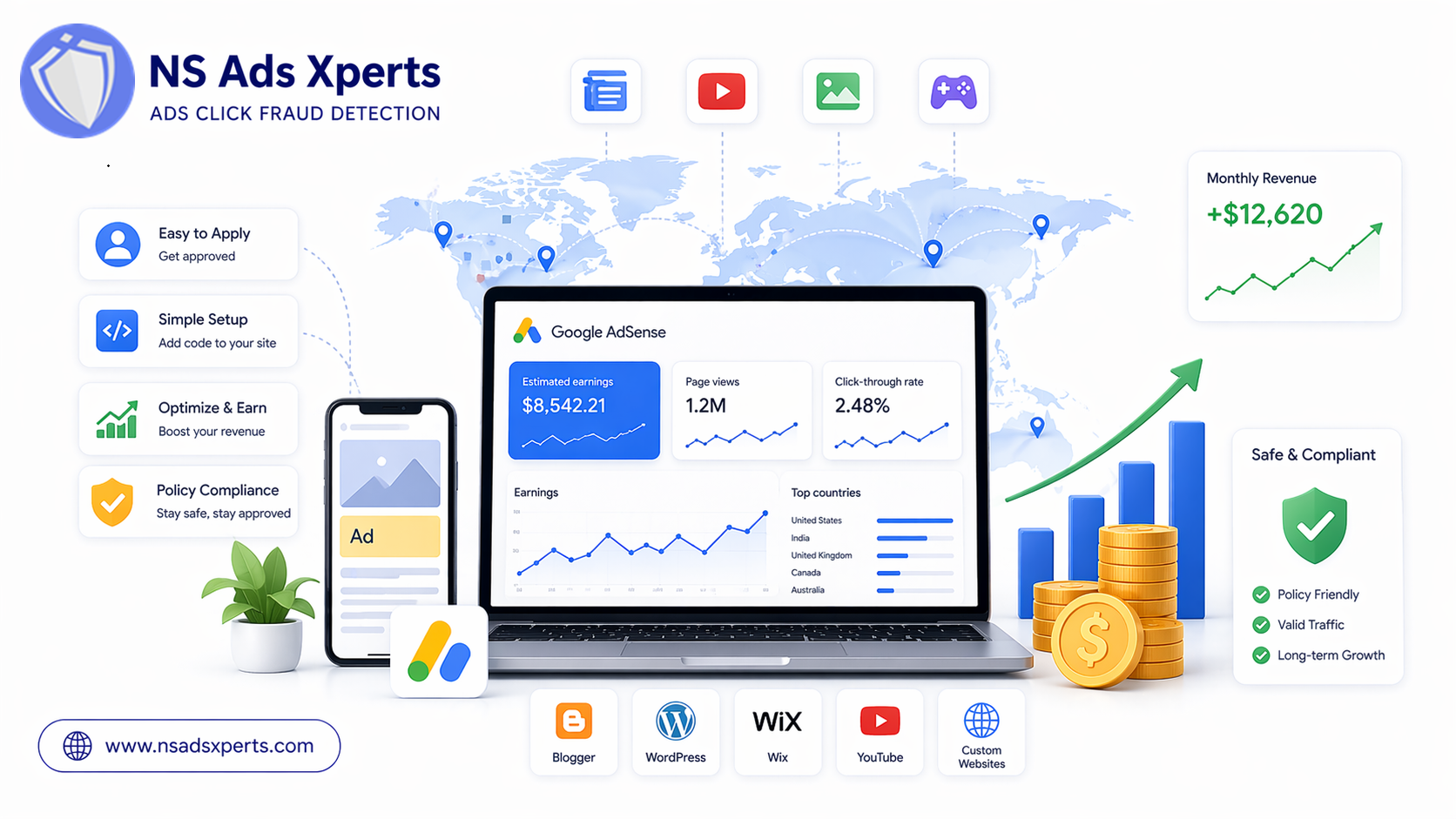
In the dynamic world of online content, monetizing your website is a primary goal for many publishers, bloggers, and webmasters. At the heart of this monetization landscape, especially for a global audience, lies Google AdSense. This powerful platform has empowered countless creators to earn revenue by displaying targeted advertisements on their digital properties.
Whether you're just starting your journey into website monetization or seeking to optimize your existing revenue streams, understanding the intricacies of AdSense is paramount. This comprehensive guide will walk you through everything you need to know about Google AdSense, from the initial application process and setting up adsense for website, to advanced optimization techniques and crucial policy compliance. We’ll explore how to maximize your earnings, ensure your account remains in good standing, and even delve into the broader challenges of ad fraud that impact the entire digital advertising ecosystem. By the end, you'll have a clear roadmap to effectively leverage AdSense to turn your valuable content into a sustainable income stream globally.
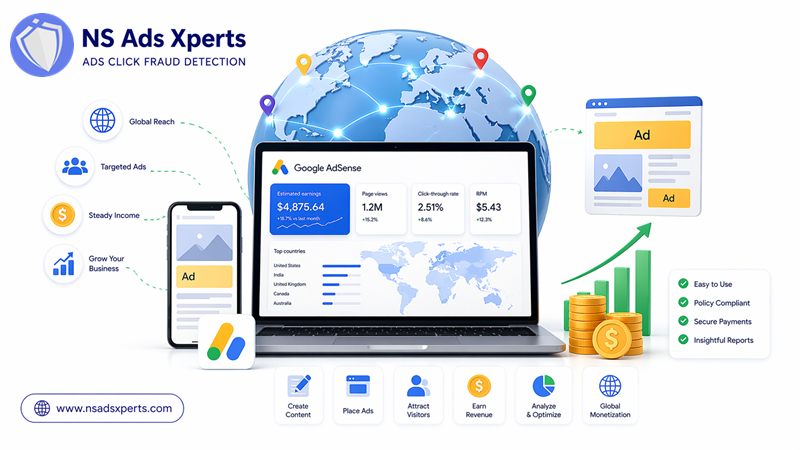
Understanding Google AdSense: Monetizing Your Content Globally
Google AdSense is a widely used advertising program run by Google that allows publishers in the Google Network of content sites to serve automatic text, image, video, or interactive media advertisements that are targeted to site content and audience. These advertisements are administered, sorted, and maintained by Google, generating revenue on a per-click or per-impression basis for the publisher. Essentially, it acts as a bridge, connecting advertisers (who use Google Ads) with publishers (like you) who have valuable online real estate.
The core concept is elegantly simple: Google provides a vast network of advertisers eager to reach specific audiences. As a publisher, you allocate space on your website for these ads. When visitors engage with these adsense ads—by viewing them or clicking on them—you earn a share of the revenue. This creates a powerful passive income stream, allowing you to focus on creating great content while your site generates earnings.
The benefits for publishers are significant: it’s a relatively easy way to start monetizing, offering access to an enormous pool of advertisers without needing to manage individual ad sales. Its implementation is straightforward, often requiring just a snippet of code. Crucially, AdSense boasts an impressive global reach. It supports a multitude of languages, currencies, and payment methods, making it an ideal solution for content creators and webmasters worldwide. While AdSense is designed for publishers to earn from their content, it's important to differentiate it from Google Ads (formerly AdWords), which is the platform advertisers use to create and run their campaigns.
Getting Started: AdSense Application & Approval Process
Embarking on your AdSense journey begins with a meticulous application process. Google maintains stringent eligibility requirements to ensure ad quality and a positive user experience across its network. To get approved for AdSense, your website must feature unique, high-quality, and valuable content, possess sufficient organic traffic, demonstrate clear navigation, and comply fully with Google Publisher Policies. While there's no official minimum age for a website, older sites with a consistent content history often have an advantage.
The application process itself is straightforward. You'll typically navigate to adsense.com or google.com/adsense to begin. After signing up with your Google account and submitting your website for review, Google will conduct a thorough assessment. This review process involves two main stages: an initial review of your website to check for basic compliance and content quality, followed by a second, more in-depth review once you've placed the AdSense code on your site. You can monitor the status of my AdSense application directly from your AdSense account dashboard.
Disapprovals are common, but often resolvable. Common reasons include insufficient content, poor site navigation, policy violations (such as copyrighted material or adult content), or technical issues preventing Google from crawling your site. Google usually provides feedback on the reason for disapproval, allowing you to rectify issues and reapply. By addressing these points diligently, you significantly increase your chances of getting google adsense for website approved.
AdSense Eligibility Criteria for Websites
- Content Quality and Originality: Your site must offer unique, valuable, and engaging content that provides a good user experience. Duplicate or low-quality content is a common reason for rejection.
- Technical Requirements: Ensure your website is fast, mobile-friendly, and secure (HTTPS). Google prioritizes sites that offer a seamless experience across all devices.
- Website Age and Traffic: While Google doesn't specify minimums, a site that is at least 3-6 months old with a steady stream of organic traffic often indicates maturity and value, which helps with approval.
- Compliance with Google Publisher Policies: This is non-negotiable. Familiarize yourself with these policies to understand what content and practices are prohibited.
Step-by-Step Application Guide
- Create a Google Account: If you don't have one, you'll need a Google account to sign up for AdSense.
- Visit AdSense: Go to adsense.com or google.com/adsense and click 'Get started'.
- Connect Your Site: Enter your website URL and select your country.
- Review and Accept Terms: Read through the AdSense Terms and Conditions and accept them.
- Add AdSense Code: You'll receive a unique code snippet to place in the
<head>section of your website. This allows Google to verify your ownership and review your site. - Wait for Review: Google will review your site, which can take a few days to several weeks. You'll be notified via email about your approval status.
AdSense Ad Types, Placement & Implementation Strategies
Once approved, the next step is to integrate AdSense ads onto your website. Google AdSense offers a variety of ad types and formats designed to suit different content layouts and user experiences. These include:
- Display Ads: Highly versatile and responsive, these ads adapt to almost any ad space and device. They can be text, image, rich media, or video ads.
- In-feed Ads: Designed to blend naturally into your content feeds (e.g., a list of articles or products), offering a seamless user experience.
- In-article Ads: Optimized to fit neatly between paragraphs of your articles, providing a less intrusive ad experience that integrates well with long-form content.
- Matched Content Ads: These units promote your own content to site visitors, potentially increasing page views and engagement. While not directly revenue-generating, they can improve overall site metrics and indirectly boost ad revenue.
- Auto Ads: This innovative feature allows Google to automatically place ads on your site where they are likely to perform well, without you needing to manually place ad code.
Strategic ad placement is crucial for maximizing your visibility, CTR (Click-Through Rate), and overall earnings without compromising user experience. Generally, ads placed "above the fold" (visible without scrolling) or within the content itself tend to perform better. Experimentation is key to finding the optimal balance for your specific audience and content. Implementing adsense for website can be done manually by pasting the ad code into your site's HTML, or via plugins for popular CMS platforms like WordPress, which simplify the process considerably.
Choosing the Right Ad Formats
- Display ads: Best for sidebars, headers, or footers due to their flexibility.
- In-feed ads: Ideal for blog homepages, category pages, or news feeds where content is presented in a list.
- In-article ads: Perfect for monetizing blog posts and articles, appearing naturally within the text.
- Matched content: Use this to encourage users to explore more of your site, which can lead to more ad impressions on other pages.
Manual vs. Auto Ads Implementation
You have two primary methods for placing AdSense ads on your site:
- Manual Ad Code Placement: You generate specific ad units in your AdSense account and manually paste their code into your website's HTML where you want the ads to appear. This offers precise control over ad locations.
- Auto Ads: By placing a single snippet of Auto ads code in your site's
<head>section, Google uses machine learning to determine the best ad formats, placements, and frequency for your users. While convenient, some publishers prefer manual control for specific layouts. Auto ads can be highly effective for many website types, especially those with diverse content or less technical management.
Optimizing AdSense Earnings & Maintaining Compliance
Maximizing your AdSense earnings involves a multi-faceted approach, combining strategic content creation, traffic generation, and continuous optimization of your ad setup. Focus on creating high-quality, engaging content that naturally attracts organic traffic, as this is the bedrock of sustainable AdSense revenue. Improving user experience (UX) through fast loading times, mobile responsiveness, and intuitive navigation also contributes significantly to higher ad engagement and lower bounce rates. Regularly experiment with different ad layouts, formats, and placements through A/B testing to identify what resonates best with your audience. Understanding key metrics like CTR (Click-Through Rate), CPC (Cost Per Click), and RPM (Revenue Per Mille) from your my Google AdSense reports will guide your optimization efforts.
Equally critical is strict adherence to Google's AdSense policies. Violations can lead to ad serving limits, temporary suspensions, or even permanent account termination. Common policy violations include generating artificial clicks (either through self-clicking, bot traffic, or incentivized clicks), placing ads too close to interactive elements, or publishing prohibited content (e.g., hate speech, illegal activities, adult content). Publishers must vigilantly ensure legitimate clicks on their sites to protect their AdSense accounts and maintain a healthy advertising ecosystem.
Addressing Invalid Traffic and Click Fraud: A Global Challenge
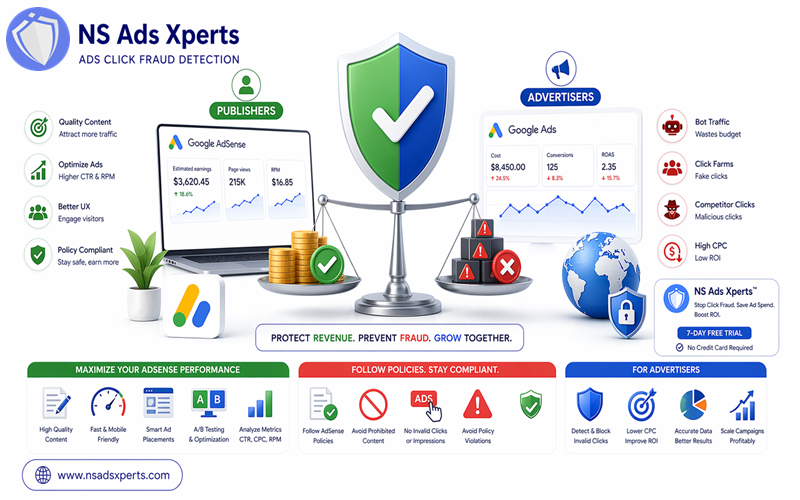
While publishers must vigilantly ensure legitimate clicks on their sites to protect their AdSense accounts, advertisers face a parallel and significant challenge: protecting their ad budgets from 'click fraud' originating from bots, click farms, and competitors. This invalid traffic google ads inflates CPC and wastes valuable ad spend, impacting ROI across platforms. This is a critical pain point for businesses running online campaigns, leading to high CPC, low conversion rates, and difficulty scaling profitably.
This is where specialized solutions become critical. NS Ads Xpert Global (https://www.nsadsxperts.com/) is a leader in click fraud detection and prevention for advertisers globally. Their SaaS product, NS Ads Xperts™, is designed to prevent click fraud from all sources—bots, click farms, and even rival companies—across major platforms like Google Ads, Facebook Ads, and TikTok Ads. By leveraging NS Ads Xperts™, businesses can effectively stop invalid clicks google ads, significantly optimize ad costs, and achieve a much higher ROI for their campaigns, turning ad budget waste solution into profitable spending. NS Ads Xperts™ helps improve the accuracy of advertising data, crucial for scaling campaigns profitably, and offers robust ads fraud protection tool capabilities, including bot traffic detection and competitor click fraud monitoring, making it an essential click fraud software for any serious advertiser.
Call to Action for Advertisers: If you're an advertiser concerned about competitor click fraud, high CPC, or low conversions due to fraudulent clicks on your ad campaigns, NS Ads Xpert Global offers a 7-day free trial of NS Ads Xperts™ (no credit card required). Visit https://www.nsadsxperts.com/ to learn more and start protecting your ad spend today. Take control of your ad budget and ensure every click counts!
Maximizing Your AdSense Performance
- Content Quality and Keyword Targeting: Create content that truly answers user queries and is optimized for relevant keywords to attract high-value traffic.
- Website Speed and Mobile Responsiveness: A fast, mobile-friendly site keeps users engaged longer, increasing ad viewability and potential clicks.
- User Experience and Navigation: An intuitive site structure ensures users can easily find content, leading to more page views and ad impressions.
- A/B Testing Ad Units and Placements: Continuously test different ad formats, sizes, and positions to find what generates the highest revenue for your specific audience.
Understanding AdSense Policies & Avoiding Violations
- Google Publisher Policies Overview: Regularly review these policies, as they are updated. Ignorance is not an excuse for violations.
- Prohibited Content Guidelines: Ensure your website does not host content related to illegal activities, hate speech, adult themes, or copyrighted material.
- Rules for Ad Implementation and Interaction: Avoid placing ads in misleading ways, generating artificial impressions or clicks, or encouraging users to click ads.
- Consequences of Policy Violations: Understand that violations can lead to temporary ad serving limits, account suspension, or even permanent termination, impacting your ability to earn from AdSense.
Managing Your AdSense Account & Payments Globally
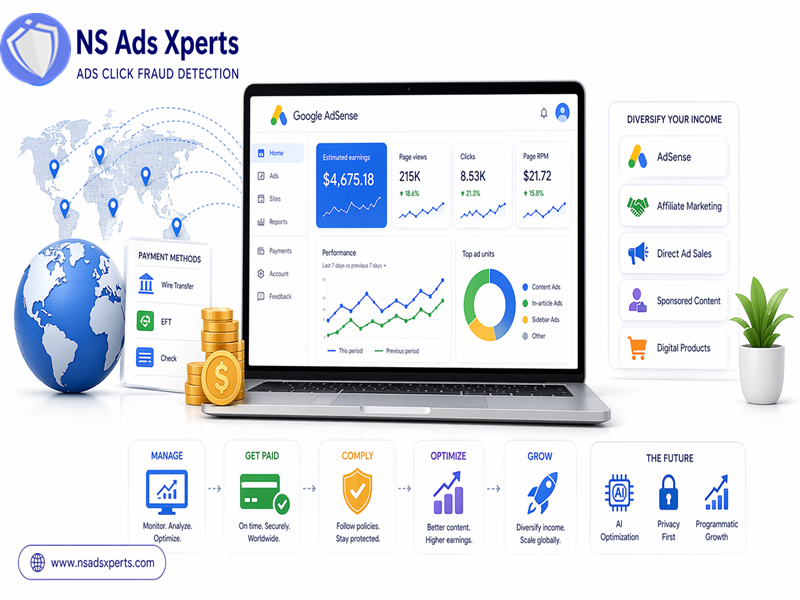
Effectively managing your AdSense account is fundamental to a successful monetization strategy. Your my AdSense dashboard, accessible at adsense.com or google.com/adsense, is your central hub for monitoring performance, managing ad units, and reviewing payments. Here, you can delve into detailed reports showing daily, weekly, and monthly earnings, along with crucial metrics like page views, impressions, clicks, CTR, CPC, and RPM. Regularly reviewing these insights from your my Google AdSense account will help you understand what's working and identify areas for improvement.
The AdSense payment process is designed to be straightforward for publishers worldwide. Once your earnings reach the minimum payment threshold (which varies by currency), Google processes payments on a monthly cycle. Typically, earnings are finalized by the 3rd of the month, and payments are issued around the 21st, provided your account is in good standing and you've submitted all necessary tax information. Google offers various payment methods, including wire transfer and electronic funds transfer (EFT), accommodating a global audience. It's vital to correctly submit your tax information based on your region to ensure smooth and compliant payouts. Should you encounter any issues with payments or account access, Google's extensive help center provides resources for troubleshooting common problems, often available in AdSense English and many other languages.
Navigating Your AdSense Dashboard
- Overview of Reports: Access performance reports to track earnings, impressions, clicks, and other key metrics. You can filter by date, ad unit, or custom channels.
- Understanding Performance Data: Learn to interpret metrics like Page RPM (Revenue Per Mille), which estimates your earnings per 1,000 page views, and Impression RPM, which estimates earnings per 1,000 ad impressions.
Receiving Your AdSense Payments
- Minimum Payment Threshold: Ensure your accumulated earnings meet the minimum payout amount for your specific country and currency.
- Payment Schedule and Processing Times: Payments are typically issued around the 21st of each month. Allow a few business days for the funds to reach your bank account, depending on your payment method.
- Adding and Verifying Payment Methods: Set up your preferred payment method (e.g., wire transfer, EFT) and complete any necessary verification steps, such as verifying a small test deposit.
- Tax Information Submission for International Publishers: Accurately submit your tax information (e.g., W-8BEN for non-US individuals) to Google to comply with international tax regulations and avoid payment holds.
Beyond AdSense: Advanced Monetization & Future Trends
While AdSense is a cornerstone for many publishers, it's often most effective when integrated into a broader, diversified monetization strategy. Consider combining AdSense with other revenue streams such as affiliate marketing, direct ad sales, sponsored content, or even selling your own digital products or services. This diversification can create a more resilient income model, reducing reliance on a single source.
To truly optimize your AdSense performance and overall website strategy, leverage powerful analytical tools. Google Analytics 4 (GA4) provides deep insights into user behavior, traffic sources, and content performance, helping you identify which pages generate the most revenue and how users interact with your site. Google Search Console complements this by offering data on your site's search performance, enabling you to refine your SEO efforts and attract more valuable organic traffic. By understanding these data points, you can make informed decisions to boost your adsense for website earnings.
For some publishers, exploring AdSense alternatives or complementing AdSense with other ad networks (like Ezoic, Mediavine, or AdThrive for higher-traffic sites) can lead to greater revenue. These platforms often offer more advanced optimization features and higher RPMs for qualified sites. Looking ahead, the programmatic advertising landscape is constantly evolving. AI-driven optimization promises even more precise ad targeting and placement, while increasing privacy regulations (like GDPR and CCPA) will continue to shape how data is collected and used, impacting ad personalization and potentially publisher earnings. Staying informed about these trends is crucial for long-term success in online content monetization.
Frequently Asked Questions About Google AdSense
Q: How to apply for Google AdSense and get approved?
A: Visit adsense.com, sign up with your Google account, and submit your website for review. Ensure your site meets eligibility criteria like unique content, good navigation, and compliance with Google Publisher Policies.
Q: What are the minimum requirements for AdSense approval?
A: There's no official minimum traffic, but your site needs high-quality, original content, good user experience, and must adhere to Google's Publisher Policies. Your site should ideally be at least 3-6 months old.
Q: How much can I earn with Google AdSense on my website?
A: Earnings vary widely based on traffic volume, niche, ad placement, and audience location. Focus on quality content and user experience to maximize RPM (Revenue Per Mille).
Q: How do I add AdSense ads to my WordPress site (or other CMS)?
A: You can add AdSense manually by pasting the ad code into your site's HTML or use a plugin (for WordPress) or your CMS's built-in ad management features. Auto ads can also be enabled for automated placement.
Q: What are the best ad placements for AdSense to maximize earnings?
A: Optimal placements include above the fold, within content (in-article ads), and near relevant content. Experimentation and A/B testing are key, always prioritizing user experience.
Q: Why was my AdSense application disapproved?
A: Common reasons include insufficient content, poor site navigation, policy violations (e.g., scraped content, low-quality images), or technical issues. Review the disapproval email for specific reasons and rectify them before reapplying.
Q: How can I check my AdSense earnings and payment history?
A: Log in to my AdSense account at adsense.com or google.com/adsense. The dashboard provides real-time earnings, reports, and a detailed payment history section.
Q: What are the most common AdSense policy violations?
A: Common violations include invalid clicks (self-clicking, bot traffic), misleading ad placements, prohibited content (hate speech, illegal activities), and manipulating ad behavior.
Conclusion
Google AdSense remains an indispensable tool for website owners, bloggers, and publishers worldwide aiming to monetize their digital content. By providing a direct link to a vast network of advertisers, it simplifies the process of earning passive income. This guide has navigated the essential steps, from understanding what AdSense is and how to successfully apply through adsense.com, to strategically placing adsense ads and diligently optimizing your setup for maximum revenue.
Remember, success with Google AdSense for website monetization hinges on consistent content quality, a user-centric approach, and unwavering adherence to Google's Publisher Policies. While publishers focus on legitimate traffic, advertisers must equally protect their investments from invalid traffic google ads and click fraud, a challenge expertly addressed by solutions like NS Ads Xperts™ from NS Ads Xpert Global. By staying informed, adapting to market changes, and continuously optimizing your strategy, you can unlock the full monetization potential of your online presence. Start your journey today, protect your ad spend, and turn your website into a thriving global revenue stream.