
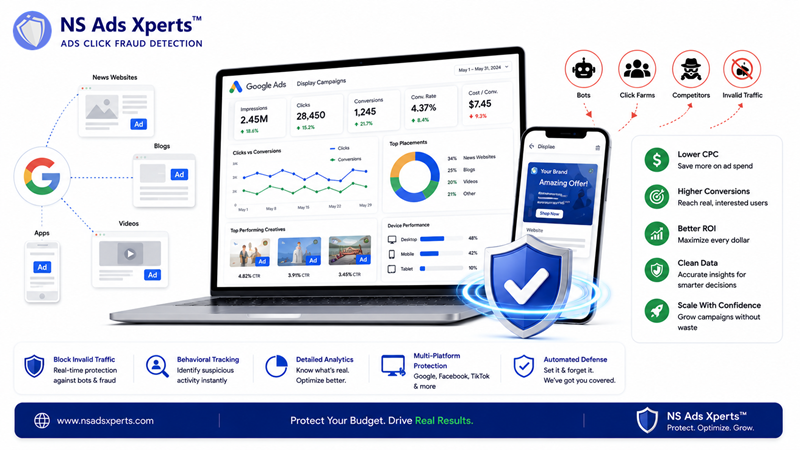
Running advertising campaigns feels like pouring money into a leaky bucket when a significant portion of your budget vanishes into invalid clicks. For businesses leveraging the immense reach of Google Display Ads, this isn't just a hypothetical concern; it's a daily reality costing advertisers billions.
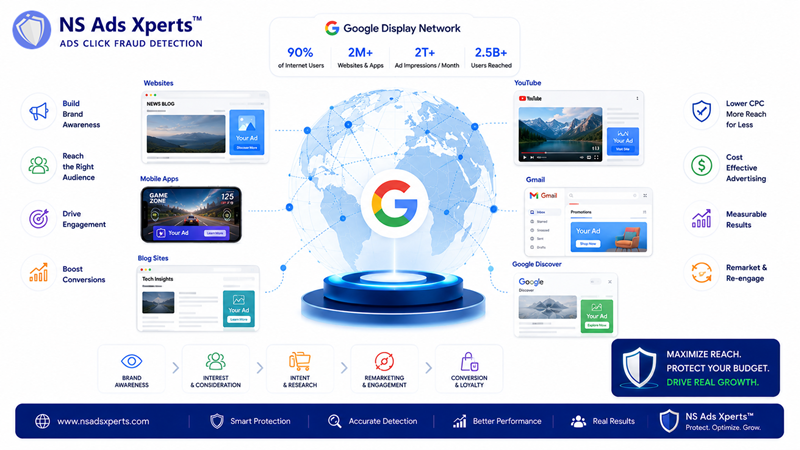
The Google Display Network (GDN) is a colossal platform, reaching 90% of global internet users across over 2 million websites, apps, and Google-owned properties like YouTube and Gmail. This unparalleled visibility makes Google Display Ads a cornerstone of digital marketing, offering an average CPC that is often lower than Google Search Ads. However, this broad reach also exposes campaigns to sophisticated invalid traffic (SIVT) – clicks from bots, click farms, and even competitors – that inflate costs and deflate ROI.
This article will guide you through maximizing the true potential of your Google Display Ads campaigns, from precision targeting and compelling creatives to, crucially, protecting your ad spend from the silent drain of invalid clicks. You'll learn how to transform your display strategy into a powerful, profitable engine for growth.
What Are Google Display Ads and Why They Matter for Growth
At its core, Google Display Ads are visually engaging advertisements—images, text, or video—that appear across the vast Google Display Network. Unlike Google Search Ads, which capture intent from active searchers, Display Ads proactively reach potential customers as they browse websites, use apps, or check their Gmail. This passive, yet pervasive, presence is invaluable for:
- Brand Awareness: With the GDN serving over 2 trillion ad impressions monthly to more than 2.5 billion users, Display Ads are a powerhouse for building brand recognition. For example, a user's search activity for a specific brand can increase by 155% after encountering a Display Ad.
- Demand Generation: By reaching users based on their interests and behaviors, Display Ads can introduce new products or services to a relevant audience, sparking initial interest before they even search.
- Remarketing: Re-engaging users who have previously visited your site is highly effective. Combining remarketing with similar audience targeting can boost conversion rates by 40% or more.
- Cost-Effectiveness: Display Ads generally boast a lower average Cost Per Click (CPC) compared to Search Ads (e.g., an average of $1.72 in 2023, with some industries as low as $0.44), making them an efficient channel for broad reach.
The strategic value lies in their ability to engage users at all stages of the buying cycle, from initial awareness to driving the final conversion, often at a more accessible price point than search-focused campaigns.
Unlocking Precision: Advanced Targeting Strategies for Google Display Ads
The real power of Google Display Ads isn't just in their reach, but in their ability to target specific audiences. Moving beyond basic demographics, effective campaigns leverage a combination of strategies:
- Behavioral Targeting (Audience Targeting): This is about reaching users based on their online interests and behaviors.
- Affinity Audiences: For broad brand awareness, targeting users with a demonstrated interest in a specific topic (e.g., "travel enthusiasts").
- In-Market Audiences: For driving conversions, reaching users actively researching or planning a purchase in a specific category (e.g., "people looking to buy a new car").
- Custom Segments: Create highly specific audiences based on search terms, URLs visited, or app usage, allowing for granular targeting.
- Remarketing/Customer Match: Essential for re-engaging past website visitors or existing customer lists with tailored messages, significantly increasing conversion likelihood.
- Contextual Targeting: Place your ads on websites and apps whose content is directly relevant to your keywords or topics. If you sell hiking gear, your ads appear on outdoor adventure blogs, not cooking sites.
- Placement Targeting: For ultimate control, manually select specific websites, apps, or even YouTube channels where you want your ads to appear. This is ideal for highly niche markets or competitor analysis.
- Optimized Targeting: Let Google's AI expand your reach to users showing similar conversion patterns, often beyond your initial audience segments, finding new high-value prospects.
The key to success is layering these options. For instance, you could target an "In-Market Audience" for "home decor" on "Placement-targeted" interior design blogs, excluding users who have already converted. This laser-focused approach ensures your ad spend connects with the most receptive audiences, moving beyond generic impressions.
Crafting Compelling Creatives: The Power of Responsive Display Ads
In the visually driven world of Google Display Ads, your creative assets are paramount. Responsive Display Ads (RDAs) are a game-changer, automatically adjusting their size, appearance, and format to fit virtually any available ad space across the Display Network. To maximize their performance:
- Provide Diverse Assets: Upload multiple high-quality images (landscapes, squares, logos), headlines (short and long), and descriptions. Google's AI uses these components to create hundreds of ad variations, testing and optimizing for the best performers. Responsive ads now account for 72% of image ads, demonstrating their prevalence and effectiveness.
- Focus on Clarity and Value: Each headline and description should clearly communicate a benefit or solve a problem. Avoid jargon.
- High-Quality Visuals: Your images and videos are often the first point of contact. Invest in professional, engaging visuals that stand out and align with your brand. Video display ads offer 89% higher click-through rates compared to static image ads.
- Test and Iterate: Monitor which asset combinations perform best. Google provides insights into asset performance, allowing you to replace underperforming elements and continuously refine your creatives.
By providing a rich set of assets, you empower Google's AI to optimize ad delivery, ensuring your message is seen in the most impactful way, reducing ad blindness, and driving higher engagement.
The Silent Killer: How Invalid Traffic Drains Your Google Display Ad Budget
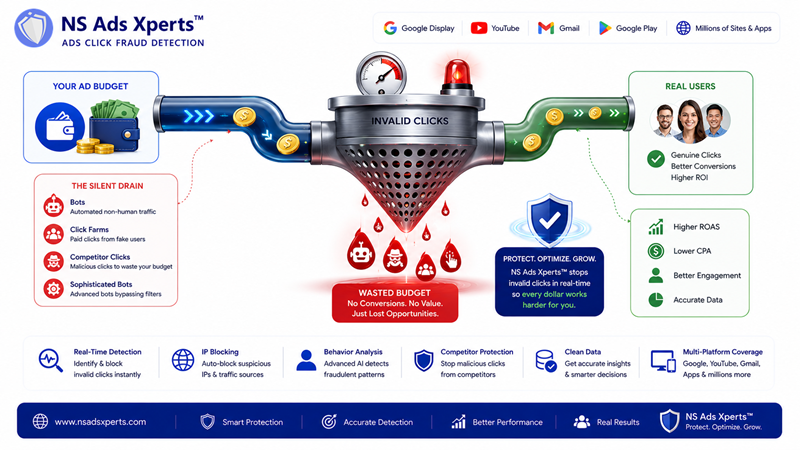
Despite the advanced targeting and creative capabilities of Google Display Ads, a pervasive threat silently undermines campaign performance: invalid traffic (IVT). This refers to clicks and impressions that do not come from a real user with genuine interest. It includes:
- General Invalid Traffic (GIVT): Non-malicious non-human traffic, like known bots and web crawlers, which Google typically filters automatically.
- Sophisticated Invalid Traffic (SIVT): This is the more insidious type – advanced bots mimicking human behavior, click farms, and even malicious clicks from competitors. SIVT is designed to bypass standard filters, making it incredibly difficult for advertisers to detect manually.
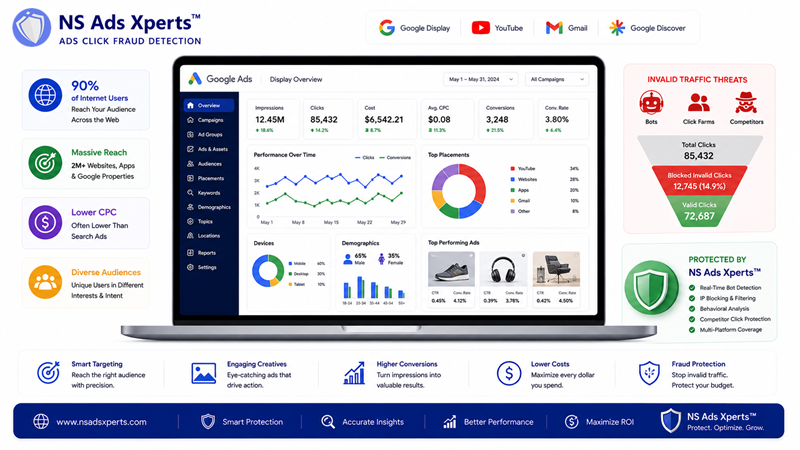
The financial impact is staggering. In 2026, advertisers are projected to waste over $70 billion globally on invalid traffic, a 33% increase from 2022 levels. Approximately 9% of all paid traffic across search and social campaigns is invalid. For businesses running Google Display Ads, this translates to:
- High Cost Per Click (CPC) and Cost Per Acquisition (CPA): You pay for clicks that will never convert.
- Low Conversion Rates: Your conversion rate suffers because a portion of your traffic isn't human.
- Wasted Ad Budget: Every dollar spent on an invalid click is a dollar taken away from reaching a genuine potential customer.
- Skewed Data: IVT contaminates your analytics, making it impossible to accurately optimize campaigns or measure true ROI.
While Google has systems in place to detect and filter some invalid traffic, these systems are primarily reactive and often struggle with sophisticated, evolving SIVT. Advertisers frequently find their campaigns plagued by competitor click fraud or bot attacks that Google's native filters miss, leading to significant budget waste and frustration.
Safeguarding Your Investment: NS Ads Xperts™ for Cleaner Google Display Ads
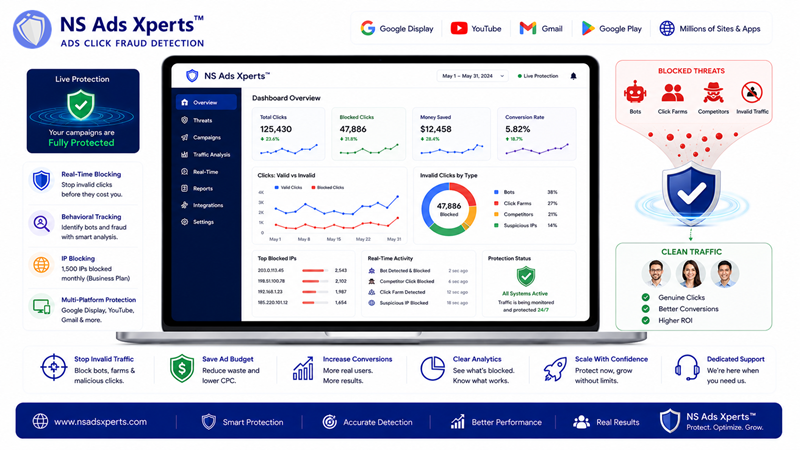
This is where NS Ads Xperts™ steps in as a critical solution for anyone investing in Google Display Ads. Our SaaS platform is specifically designed to combat the sophisticated invalid traffic that Google's own systems often miss, giving you back control over your ad budget and improving your ROI.
NS Ads Xperts™ works by:
- Real-time Detection & Blocking: Our advanced algorithms analyze visitor behavior in real-time, identifying and blocking clicks from bots, click farms, and even malicious competitors before they waste your budget. Features like our 1,500 IP block/month in the Business plan ensure comprehensive protection.
- Behavioral Tracking: We go beyond simple IP blocking, tracking user behavior to differentiate between genuine interest and suspicious activity. This ensures legitimate users are not blocked, while fraudulent ones are swiftly identified.
- Optimizing Ad Spend: By preventing invalid clicks, NS Ads Xperts™ ensures that every dollar you spend on Google Display Ads goes towards reaching actual potential customers. This directly addresses high CPC and low conversion rates, allowing you to scale your campaigns profitably.
- Detailed Analytics: Gain clear insights into blocked traffic, fraudulent sources, and the actual savings generated. Our detailed analysis, available in Business and Agency plans, helps you understand where your budget was being wasted.
Whether you're an e-commerce business struggling with high CPC, a marketing agency managing multiple client accounts, or an affiliate marketer battling competitor click fraud, NS Ads Xperts™ provides the robust protection you need. It turns your leaky ad budget into a focused, efficient investment, significantly boosting the performance of your Google Display Ads.
Frequently Asked Questions About Google Display Ads
Q: What are Google Display Ads?
A: Google Display Ads are visual advertisements (images, text, video) that appear across millions of websites, apps, and Google properties within the Google Display Network (GDN). They are designed to reach users proactively based on their interests and online behavior, rather than active searches, making them ideal for brand awareness and demand generation.
Q: How do Google Display Ads differ from Google Search Ads?
A: The primary difference lies in placement and user intent. Google Display Ads are visual, appear across the GDN, and target users based on interests/behavior as they browse. Google Search Ads, conversely, are text-based, appear on Google Search results pages, and target users who are actively searching for specific keywords, indicating immediate intent.
Q: What types of targeting are available for Google Display Ads?
A: Google Display Ads offer diverse targeting options. These include behavioral targeting (like Affinity, In-Market, Custom Segments, and Remarketing audiences), contextual targeting (placing ads on relevant websites/apps based on keywords or topics), demographic targeting (age, gender, income), and placement targeting (manually selecting specific sites or apps).
Q: What are Responsive Display Ads?
A: Responsive Display Ads (RDAs) are an ad format where advertisers provide various assets—such as multiple images, headlines, logos, and descriptions. Google's AI then automatically combines and adjusts these assets to create optimal ad variations that fit virtually any available ad space across the Display Network, maximizing reach and performance.
Q: How can I prevent invalid clicks on my Google Display Ads?
A: Google has built-in systems to filter general invalid traffic. However, for more sophisticated invalid traffic (SIVT) like bot attacks or competitor click fraud, additional protection is often needed. Solutions like NS Ads Xperts™ provide real-time detection and blocking of these advanced invalid clicks, safeguarding your budget and improving the accuracy of your campaign data.
Q: Are Google Display Ads effective for brand awareness?
A: Absolutely. With the Google Display Network reaching 90% of global internet users and serving trillions of impressions monthly, Display Ads are exceptionally effective for building and reinforcing brand awareness. Their visual nature allows for strong brand messaging and recall across a vast audience.
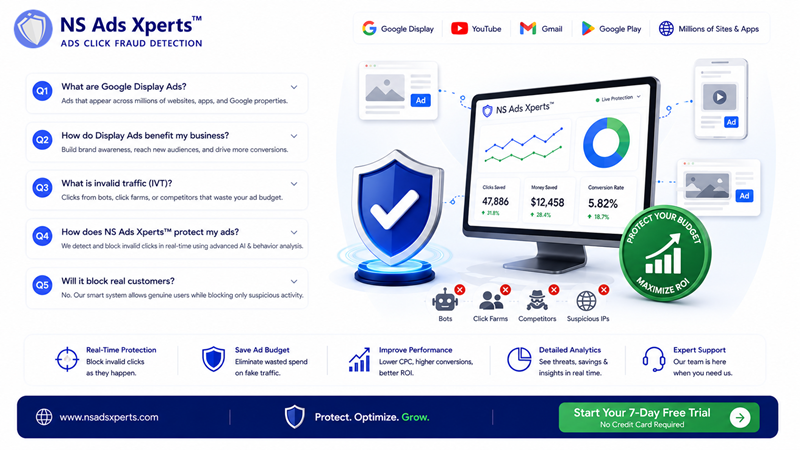
Optimizing your Google Display Ads campaigns means more than just setting up targeting and uploading creatives; it means actively protecting your investment from fraudulent clicks. Without a robust defense against invalid traffic, even the most perfectly crafted campaigns will bleed budget, leading to frustratingly low ROI and skewed performance data.
Don't let bots and competitors drain your ad spend. Take the proactive step to secure your marketing budget and ensure your Google Display Ads deliver genuine, measurable results. Start your 7-day free trial of NS Ads Xperts™ today – no credit card required – and experience the difference of clean, effective advertising.