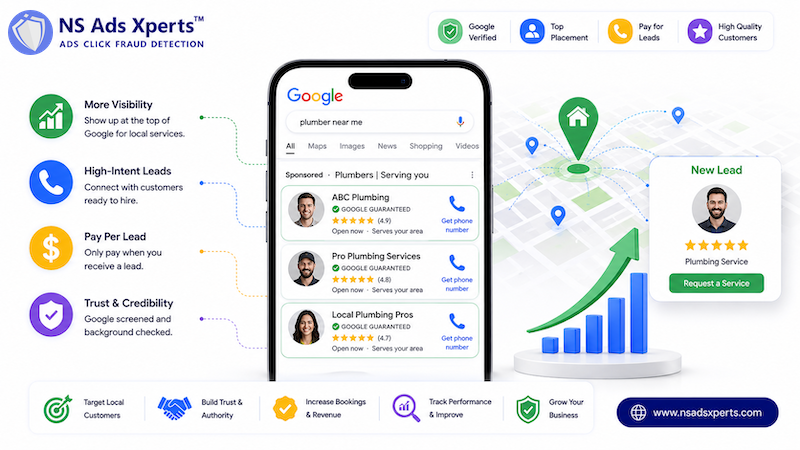
Did you know that in 2026, 27.78% of users prefer clicking Local Service Ads (LSAs) over traditional paid search results? For local businesses, this isn't just a statistic; it's a direct signal that Google's specialized ad format for service providers offers unparalleled visibility and a direct pipeline to ready-to-convert customers. If your business isn't leveraging Local Service Ads effectively, you're leaving high-quality leads and significant revenue on the table.
This guide will cut through the noise, showing you exactly how to master LSAs in 2026. We'll dive into their unique pay-per-lead model, dissect the critical ranking factors that determine your ad's position, and provide actionable strategies to maximize your return on investment. You'll learn how to navigate Google's automated lead crediting system, optimize your Google Business Profile for LSA dominance, and integrate these powerful ads into your broader digital marketing strategy.
Unlocking Top Visibility: What Are Local Service Ads?
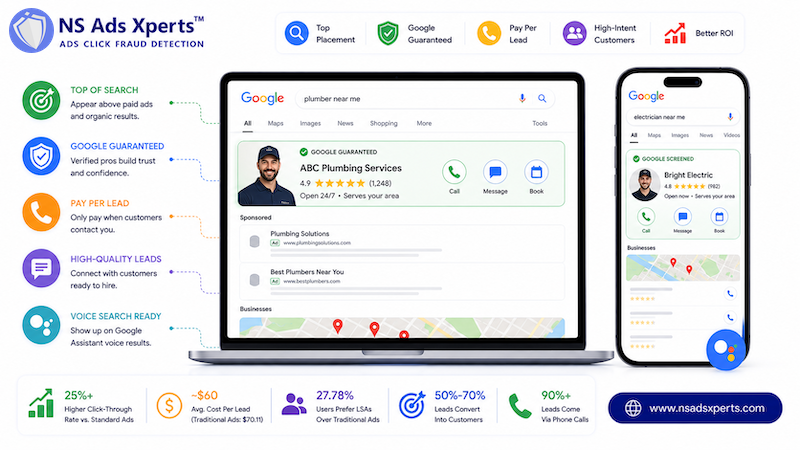
Local Service Ads are Google's answer to connecting local customers with trusted service providers directly. Launched in 2015 and expanding globally, LSAs appear at the very top of Google search results, outranking traditional pay-per-click (PPC) ads and organic listings. This prime real estate is reserved for businesses that have undergone Google's rigorous background checks and qualification verification, earning them a 'Google Guaranteed' or 'Google Screened' badge.
Unlike traditional ads, LSAs operate on a pay-per-lead (PPL) model. This means you only pay when a potential customer actually contacts your business through the ad—via a call, message, or booking. This model shifts the risk from the advertiser to Google, ensuring you're paying only for genuine engagement from users who are actively searching for your specific service and are ready to make a decision. LSAs are also integrated with Google Assistant, allowing your business to appear in voice search responses, further broadening your reach.
The Hard Numbers: Why LSAs Deliver Superior ROI
The effectiveness of Local Service Ads isn't just anecdotal; it's backed by compelling data:
- Higher Engagement: LSAs are clicked 25% more often than standard ads, indicating a strong user preference for trusted, verified local options.
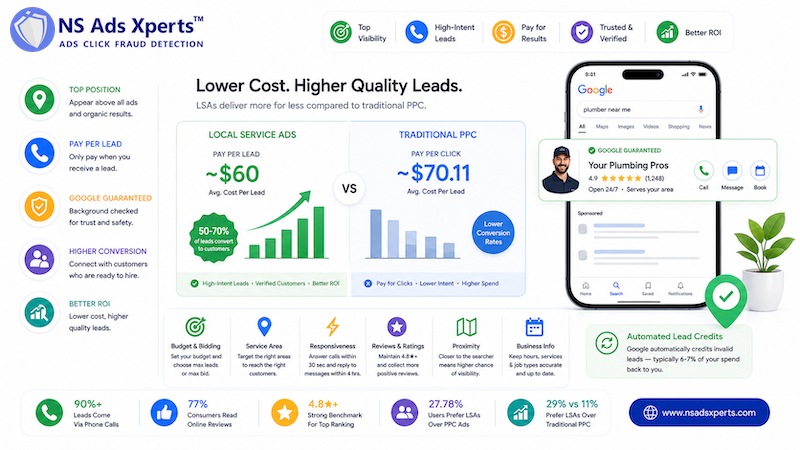
- Cost Efficiency: The average cost per lead for Google Local Service Ads is approximately $60, significantly lower than the average $70.11 for traditional search ads. Some industries even see costs as low as $20-$30 per lead.
- Customer Preference: When presented with search results, 27.78% of users prefer clicking LSAs, making them the second most popular option after Google Maps. Consumers prefer LSAs over traditional PPC by a margin of 29% to 11%.
- High Conversion Rates: Many businesses report that 50% to 70% of leads generated by Google LSAs convert into actual customers, demonstrating their effectiveness as a low-funnel marketing tactic.
- Phone-Dominant Leads: More than 90% of leads generated through LSAs come via phone calls, providing immediate, high-intent connections.
These figures underscore why LSAs are a non-negotiable component of any local business's advertising strategy in 2026.
Mastering LSA Ranking Factors for Consistent Lead Flow
Getting your Local Service Ads to appear at the top isn't just about paying; it's about optimizing for Google's specific ranking factors. Understanding these elements is crucial for consistent lead generation:
- Budget & Bidding Strategy: While LSAs are PPL, your budget allocation signals your commitment. Google offers 'max leads' and 'max bid' options, allowing you to control how aggressively you compete for leads.
- Service Area Size: Define your service areas strategically. Too broad, and you might attract unqualified leads; too narrow, and you limit reach. Optimize for the geographic proximity to your ideal customers.
- Responsiveness: Google highly values businesses that respond quickly. The recommendation is to answer LSA calls within 30 seconds and reply to messages within 4 hours. Poor responsiveness negatively impacts your ranking.
- Overall Profile Quality (Reviews & Ratings): Your Google Business Profile (GBP) is the backbone of your LSA. A high star rating and a significant number of reviews directly influence your ad's visibility and customer trust. An unofficial benchmark for strong competition is maintaining at least a 4.8-star average.
- Proximity to Searcher: Google prioritizes businesses closest to the user's search location, making localized optimization critical.
- Business Hours & Job Types: Ensure your LSA profile accurately reflects your operating hours and the specific job types you accept within your service category to match relevant queries.
Navigating the Automated Lead Crediting System: Beyond Manual Disputes
One of the biggest pain points for LSA advertisers has been the lead dispute process. Historically, businesses manually disputed charges for invalid leads (spam, wrong numbers, outside service area). However, Google transitioned to an automated crediting system for invalid leads in mid-July 2026.
This shift aims to streamline the process, with Google automatically identifying and crediting charges for leads deemed unqualified. While this reduces manual effort, it also means less direct control over individual disputes. Businesses typically receive 6-7% of their LSA spend back in credits for unqualified leads. It's important to understand what Google considers an invalid lead and to monitor your credits closely. Also, remember that message leads are typically priced at 50% of phone leads, offering a potentially more cost-effective contact method for certain services.
Optimizing Your Google Business Profile: Your LSA Foundation
Your Google Business Profile (GBP) isn't just for organic visibility; it's the bedrock of your Local Service Ads performance. The reviews, ratings, and business information displayed on your LSA are pulled directly from your GBP. Neglecting your GBP means undermining your LSA success.
- Prioritize Reviews: 77% of consumers 'always' or 'regularly' read online reviews, and only 3% would consider a business with an average rating below 3 stars. Actively solicit reviews from satisfied customers and respond to all feedback, positive or negative. Aim for that 4.8-star benchmark.
- Accurate & Complete Information: Ensure your business name, address (even for service area businesses without a physical storefront), phone number, website, and operating hours are meticulously updated and consistent across all platforms. Inaccurate information, or issues with reviews not populating, can severely hinder your LSA performance.
- Photos & Posts: While not directly ranking factors for LSAs, a vibrant GBP with high-quality photos and regular posts enhances overall profile quality and customer engagement, indirectly boosting trust and ad effectiveness.
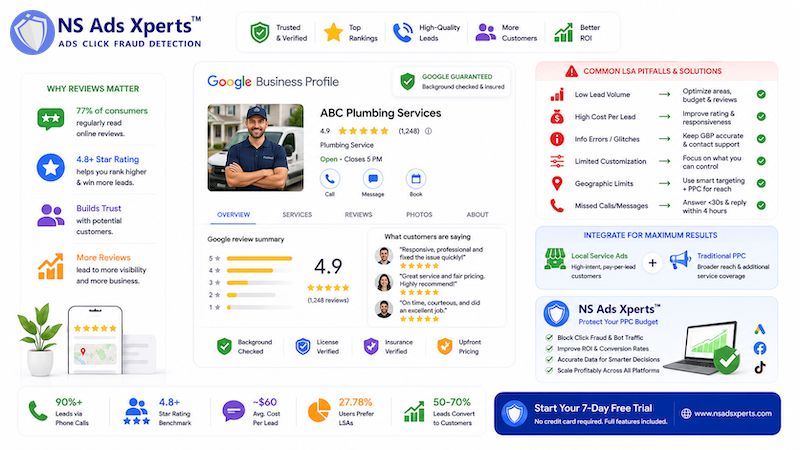
Common LSA Pitfalls and Strategic Solutions
Even with LSAs' potential, businesses encounter challenges. Here's how to address common pain points:
- Low Lead Volume: Re-evaluate your service area targeting, ensure your budget is competitive, and proactively seek more reviews for your GBP. Check that your accepted job types are comprehensive.
- High Costs Per Lead: In competitive categories, costs can rise. Focus on improving your review score and responsiveness, as these factors can lead to more efficient lead acquisition. Regularly review your automated credits for invalid leads.
- Glitches & Information Discrepancies: Issues during sign-up, reviews not populating, or incorrect business info can be frustrating. Document everything and contact Google LSA support directly. Ensure your GBP is fully verified and updated.
- Limited Customization: LSAs offer less control than traditional Google Ads. Focus on what you can control: your GBP quality, responsiveness, and budget.
- Geographic Restrictions: For businesses with spread-out customer bases, LSAs can feel limiting. Strategically define multiple service areas if applicable, and complement LSAs with broader traditional PPC campaigns.
- Missed Calls & Messages: This is a critical error. Implement systems to ensure all LSA calls are answered within 30 seconds and messages within 4 hours. Missed leads hurt both your immediate revenue and your LSA ranking.
Integrating Local Service Ads with Your Broader Digital Strategy
While Local Service Ads are incredibly effective for direct, low-funnel conversions, they are just one piece of the digital marketing puzzle. Many successful businesses allocate a significant portion (e.g., 60%) of their budget to LSAs while still dedicating resources (e.g., 40%) to traditional PPC campaigns to capture a wider audience or for services not covered by LSAs.
For these complementary PPC campaigns, optimizing every dollar spent is paramount. This is where a solution like NS Ads Xperts™ becomes invaluable. While LSAs handle their own lead validation, traditional Google Ads, Facebook Ads, and TikTok Ads are highly susceptible to click fraud from bots, click farms, and competitors. NS Ads Xperts™ actively prevents these invalid clicks, ensuring your budget for non-LSA campaigns isn't wasted on fraudulent engagement.
By integrating robust click fraud detection for your broader ad spend, you can:
- Optimize ROI: Protect your budget from invalid traffic, allowing your legitimate PPC campaigns to generate higher-quality leads and improve conversion rates.
- Improve Data Accuracy: Clean data from your PPC campaigns means better decision-making for all your marketing efforts.
- Scale Profitably: With wasted spend minimized, you can confidently scale your advertising efforts across all platforms, knowing your budget is working harder for you.
Explore how NS Ads Xperts™ can protect your non-LSA ad spend and enhance your overall digital marketing ROI. Start your 7-day free trial today – no credit card required, full features included.
Frequently Asked Questions About Local Service Ads
Q: What is the difference between Local Service Ads and traditional Google Ads (PPC)?
A: The primary difference lies in the payment model and placement. LSAs operate on a pay-per-lead model, meaning you only pay when a customer contacts you, and they appear at the very top of search results with a 'Google Guaranteed' badge. Traditional Google Ads are pay-per-click, meaning you pay for every click on your ad, and they typically link to your website, appearing below LSAs and organic listings. LSAs focus on direct contact for local services, while PPC offers broader customization and targeting for various business goals.
Q: How much do Local Service Ads cost?
A: Local Service Ads utilize a pay-per-lead model, so costs depend on the number of qualified contacts you receive. The exact cost per lead varies significantly by industry, service type, and geographical location, but generally ranges from $20 to $60. This model ensures you are only paying for genuine customer inquiries, making it a highly cost-effective advertising channel for many local businesses.
Q: What factors determine ranking in Local Service Ads?
A: Several critical factors influence your LSA ranking. These include your budget and bidding strategy, the size and relevance of your targeted service area, your responsiveness to customer inquiries (answering calls/messages quickly), the quantity and quality of reviews on your Google Business Profile, and your business's proximity to the searcher's location. Maintaining a high star rating and consistent positive reviews is particularly impactful.
Q: Can I dispute charges for unqualified leads from LSAs?
A: Yes, you can dispute charges for leads that are deemed unqualified, such as spam calls, wrong numbers, or inquiries outside your defined service area. As of mid-2026, Google has moved towards an automated crediting system for invalid leads, aiming to streamline the process. While this reduces manual effort, it's still important to monitor your account for these credits and understand what qualifies as an invalid lead under Google's policies.
Q: Do I need a physical business location to run Local Service Ads?
A: No, a physical storefront is not a strict requirement for running Local Service Ads. Service area businesses, which operate by visiting customers at their locations rather than having clients visit a physical shop, are fully eligible to participate in LSAs. You simply need to define your service areas clearly during the setup process to connect with customers in your operational zones.
Q: How important are online reviews for Local Service Ads?
A: Online reviews are critically important for Local Service Ads. Your star rating and the number of reviews displayed on your LSA profile are directly pulled from your Google Business Profile. These reviews significantly influence your ad's visibility, ranking, and, most importantly, customer trust. Consumers strongly prefer businesses with high ratings; maintaining at least a 4.8-star average is often considered a benchmark for competitive LSA performance.
Elevate Your Local Presence in 2026
Mastering Local Service Ads is no longer optional for local businesses aiming for growth in 2026. The shift to a pay-per-lead model, coupled with prime search result placement and the 'Google Guaranteed' badge, makes LSAs an unparalleled channel for acquiring high-intent customers. Start by rigorously optimizing your Google Business Profile, prioritizing customer reviews, and implementing a robust system for rapid lead response.
Review your current LSA performance against the ranking factors discussed and consider how a comprehensive approach to digital advertising—combining optimized LSAs with protected traditional PPC campaigns via tools like NS Ads Xperts™—can amplify your overall marketing ROI. The time to refine your strategy and capture those valuable local leads is now.